Do you understand the hazards around you?
When you enter the scene of an incident are you certain that you will not come into contact with a dangerous material?
Are you doing all you can to protect the health and safety of the members of your department?
If you answered ‘No’ to any of those questions, then it is time to put some hazmat training on the schedule. Here are 4 reasons why hazmat training is an important part of your fire department’s education:
1. Ensure the health and safety of department members
Firefighters do a lot to protect their communities. It is key that they also are equipped with the skills and knowledge to protect themselves and their colleagues on the scene of an incident. If hazardous materials are present and are improperly handled, it could result in accident or injury to fire department members. Therefore, it is very important to hold regular trainings about hazardous materials that may be encountered at the scene of an incident.
2. Understanding the capabilities of your department’s equipment for detection of hazardous materials
A key part of training on hazmat is to understand your own equipment’s ability to detect specific materials. It is just as important to know what you can not detect. Gas monitors are an example of equipment that could be used to detect the presence of carbon monoxide, but not all detectors would be able to detect carbon dioxide. So, it is important to understand what your detector is calibrated to loos for and what it does not have the capacity to distinguish.
3. Understand the capabilities of your equipment to handle a different hazardous materials
Spills and leaks of hazardous materials may be examples of incidents your fire department may be called on to contain or handle. In these cases it will be very important to understand not only how to handle the material itself, but also what the capabilities of your departments equipment will be in that scenario.
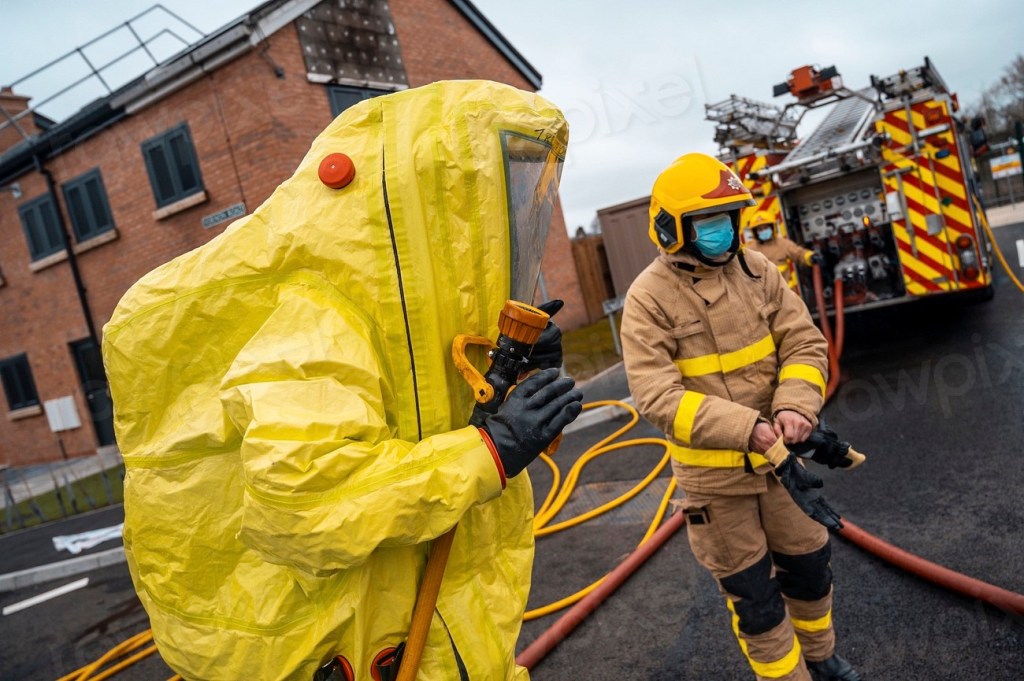
For example, understanding what kind of protective clothing you have on hand will be key. Do you have only bunker gear, or do you have properly rated PPE?
4. Build knowledge about the hazards present in your community
Understanding what hazards your department may come into contact with on the job means an understanding of your community and what is being transported through your community. If you are in a rural area, agricultural chemicals such as anhydrous ammonia for fertilizer may be a concern. Ethanol plants and industrial operations will have their own set of potentially hazardous materials present.
Simple mistakes such as the improper mixing of cleaning supplies may result in an incident requiring decontamination and/or clearing an enclosed area of toxic fumes from a chemical reaction. Propane and natural gas leaks may be a cause for concern within your community as well. Further, if your fire district is near the interstate, your department may respond to a spill or accident involving hazardous materials in route to another location.
In conclusion, hazmat training is well worth the effort and key to ensuring the health and safety of those serving on your fire department. Learning and practicing with your detection equipment will be key for determining when hazardous material is a present concern on a scene. Understanding how your equipment can help you in your strategy to react to and stabilize an event. Finally, being aware of your surrounding area and potential hazards will be key in protecting the health and well-being of your department and community from flammables, corrosives and explosives.
 Heavy R Trainng
Leave a comment