One of the most important aspects of hazmat response is being able to recognize hazardous material. This can be particularly difficult with unknown substances. Knowledge of the materials identification or, at the very least, knowing the family to which it belongs will expedite incident mitigation. Here are steps and skills that will aid in the recognition and identification of hazardous material.
Use your senses
Often the first clue we have about the presence of a hazardous material on a scene is our own senses. Smell, sight, touch, taste, and sound are the classic senses. In a hazmat event distinguishing chemical smells can be a useful skill. Sight should include the observation of the environment around you including how others on the scene are reacting. For example, skin, eye, or respiratory irritation of those who have encounter the substance can be used as clues.
Look for Department of Transportation (DOT) placards
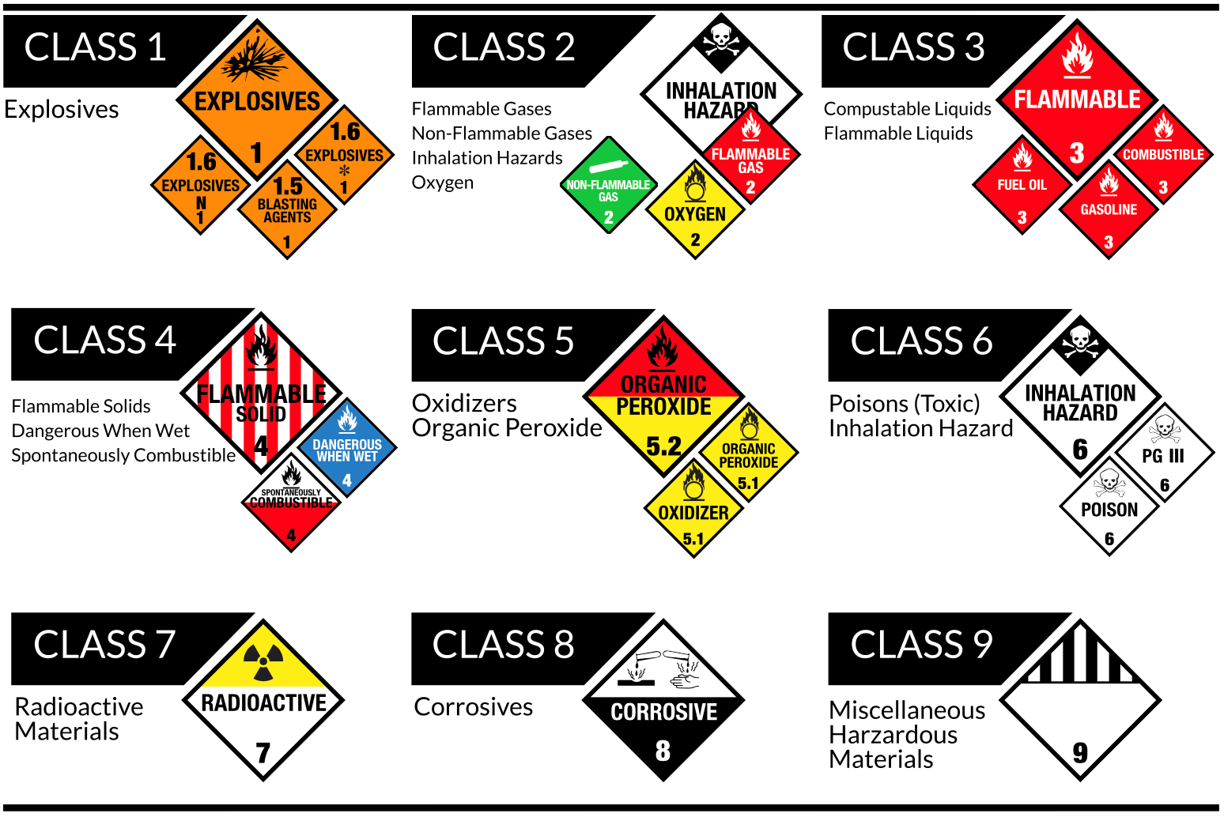
The DOT requires materials to be identified using diamond shaped placards with symbols, colors, words, and numbers to alert transporters, the public and first responders of the potential hazards. These placards are useful in making shipping and transportation decisions as well as in the unfortunate case of an accident. There are 9 classes of hazardous materials according to the DOT:
CLASS 1 – EXPLOSIVES
CLASS 2 – GASES
CLASS 3 – FLAMMABLE LIQUIDS
CLASS 4 – FLAMMABLE SOLIDS
CLASS 5 – OXIDIZING SUBSTANCES AND ORGANIC PEROXIDES
CLASS 6 – TOXIC AND INFECTIOUS SUBTANCES
CLASS 7 – RADIOACTIVE
CLASS 8 – CORROSIVE SUBSTANCES
CLASS 9 – MISCELLANEOUS DANGEROUS GOODS
In addition to those 9 classifications, color is used to help further differentiate hazardous materials:
ORANGE – EXPLOSIVES
RED – FLAMMABLE
GREEN – NON-FLAMMABLE
YELLOW – OXIDIZER
WHITE – POISIONOUS / BIOHAZARD
BLUE – MATERIAL THAT CAN BECOME FLAMMABLE
RED/WHITE – IGNITION WHEN EXPOSED TO AIR
RED/WHITE STRIPES – FLAMMABLE SOLIDS
RED/YELLOW – ORGANIC PEROXIDES
YELLOW / WHITE – RADIOACTIVE
WHITE / BLACK – CORROSIVE
WHITE / BLACK STRIPES – NON-CLASSIFIED DANGEROUS MATERIALS
Further, beyond the classification number and color many placards contain words indicating the nature of the material. Some examples would be “FLAMMABLE” or “Explosive”. Sometimes a symbol such as a flame or skull and cross bones may be used to communicate the nature of the substance. Some placards also have UN numbers.
Look for UN numbers
A UN number is a useful tool to help recognize hazardous materials. UN numbers consist of four digits assigned to a specific hazardous substance or group of materials with similar properties. The UN number may be placed nearby a placard or on a placard. First responders may look up the UN number in a table or an app to determine what the substance involved in the incident is.
The Emergency Response Guidebook is recommended as a resource for all those involved in response to hazmat events.
Other useful apps include:
Emergency Response Decision Support System
In conclusion, when approaching a scene and determining if it is a potential hazmat situation, trust your senses first, then observe placards, and UN numbers. To recognize hazardous material practicing skills such as reading placards and looking up UN numbers will be key to proper actions taken at an incident.
 Heavy R Trainng
Leave a comment