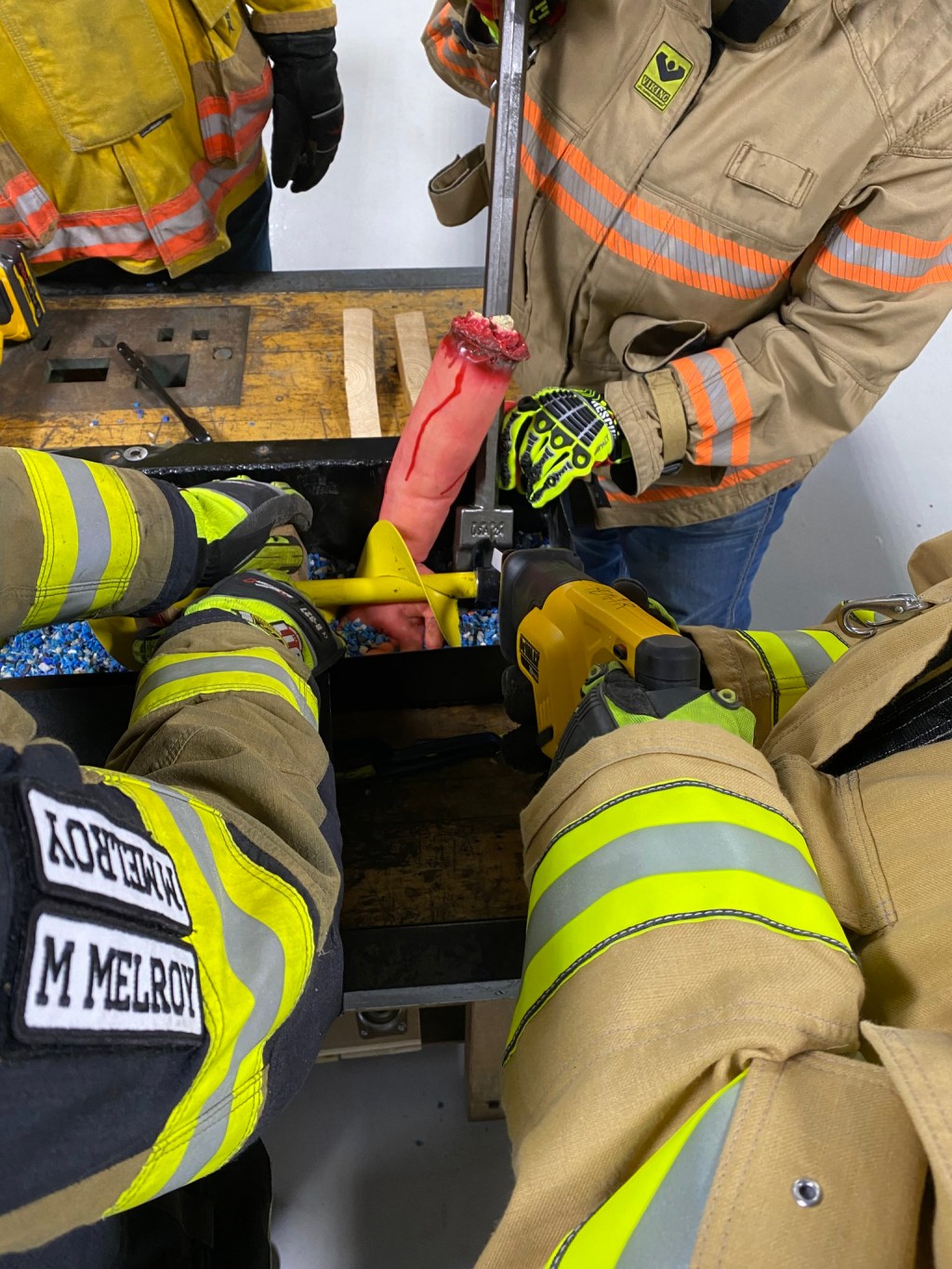
Technical rescue can have many meanings from simple ring removal to implement and entrapment. In rural America, entrapment can happen during on-the-job accidents such as getting a hand stuck in a piece of farm equipment or just people being foolish and getting stuck in the playground swing. Either way, the situation can be intense and scary if your fire department is unprepared. Here are 5 considerations for preparation and training for a technical rescue event.
1. Have a plan.
Once a call has gone out, it is too late to prepare for a technical rescue event. Training and studying other scenarios are the best way to prepare. In creating a plan and practicing executing the plan there are several things that should be considered.
What tools are at the disposal of your department?
These tools can be hand tools, power tools, pneumatic tools, hydraulics and they can go beyond the scope of what is typically kept on the rescue truck. While spreaders and cutting tools may be useful in many situations, some incidents may require items such as soapy water or a rope cutter to remove a stuck ring for example. Understanding the tools available and how they work will be key for making quick decisions during a technical rescue event.
Who on your department has skills which might become very useful during a technical rescue event such as an extraction?
Be sure to use department members who are excellent welders, carpenters or maybe have a medical background during these calls.
What other community resource and agencies should be involved?
During technical rescue incidence, when it is imperative to extricate the patient without causing any more physical or emotional damage, medical teams such as EMS will be invaluable. When training for technical rescue, getting them involved early and often can help everything go smooth when an unfortunate event does occur.
2. Assess potential hazards.
Remember, the safety of the patient is important, but so is the safety of your team. Ensuring first responder safety should be a key part when making game time decisions. This can include evaluating what PPE needs to be worn, or if a machine needs to be locked and tagged out. Once you have determined the potential hazards, the proper precautions can be put in place to protect everyone involved in the rescue effort.
3. Risk Assessment.
During the technical rescue, it might be difficult to determine the best course of action. Every potential solution will have consequences, so it is leaderships job to consider those and make the best possible decision. Some extrication methods may be faster than others but risk the patient sustaining further injury. While in other incidences having a prolonged extrication effort might delay time to proper medical attention which might be worse. Always weight all the options to make the best possible decision.
4. Consider the training level of personnel.
In some instances, if your department has not had basic training in technical rescue, it might be the best decision to call for mutual aid. Training and preparing for these situations will be key for a successful ending.
5. Consider and use available resources.
As mentioned in the planning process, being aware of the resources available to you is crucial. Those resources can include the tools your department has on hand, skills possessed by individuals within the department, other agencies and mutual aid departments. Once an incident has occurred and response is underway, now is the time to use all available resources to perform the technical rescue to the best of their ability.
In conclusion, an event involving machinery is not something to be taken lightly or brushed aside. Accidents can happen anywhere and especially in rural areas. Taking time to evaluate resources, plan a response and practice that routine in training can improve the response ensuring safety for first responders as well as the patient.
 Heavy R Trainng
Leave a comment